[Another in the series of “Responding to Bumper Stickers,” or “Long Answers to Short Questions,” in which I try to give a Latter-day Saint response to a question or claim commonly lobbed against us on X.]
As promised in my last post, here is the list of supposed contradictions between the Book of Mormon and the Bible posted by a sola scriptura Christian in a conversation on X (edited for typos, capitalization and stylistic consistency) and my response for each. It’s obviously a lot easier to list a bunch of problems than to explain their solutions, which is why this kind of “Gish gallop” is a favorite among critics in an attempt to shut down the conversation with sheer volume, as well as counting on a potential audience TL;DRing any substantive response.
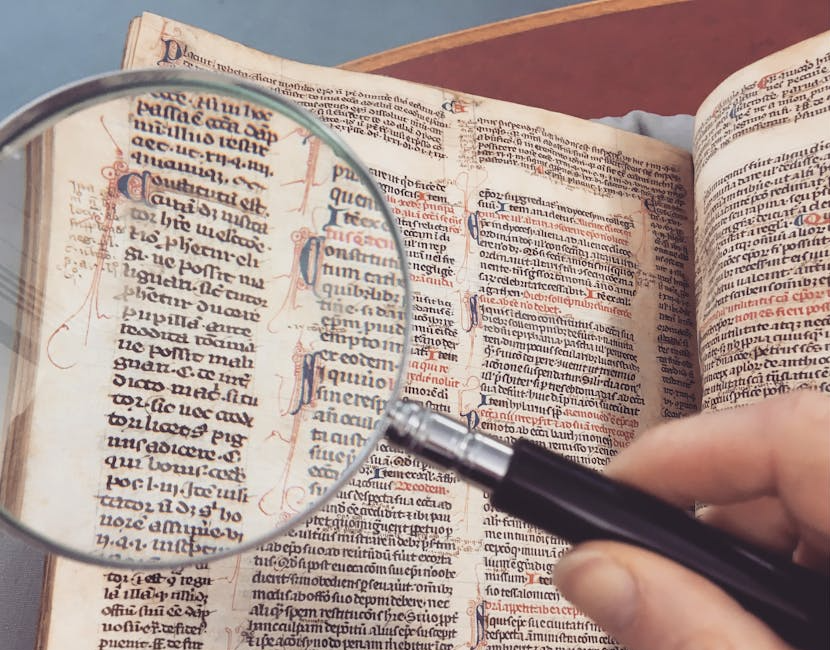
The Book of Mormon was translated from a fake language with zero historical evidence, reformed Egyptian.
As this is phrased, it’s yet another example of begging the question: “The Book of Mormon is fake, therefore reformed Egyptian doesn’t exist, therefore that’s a strike against the Book of Mormon.”
The phrase “reformed Egyptian” is used by Moroni, the final Book of Mormon author figure, roughly around 400 A.D. — that is, a full thousand years since the record was begun circa 600 B.C.:
And now, behold, we have written this record according to our knowledge, in the characters which are called among us the reformed Egyptian, being handed down and altered by us, according to our manner of speech. (Mormon 9:32)
He specifically says that it was called “reformed Egyptian” among them, and that it was altered from the original, as one would expect over the course of a thousand years. Frankly, it would be more incredible if he had claimed that the written language hadn’t changed over a millennium. (Historic Egyptian texts were written in at least three different scripts — hieroglyphic, hieratic, and demotic — of which one could rightly say that each of the latter two is a “reformed” version of the one previous.)
It seems from the text to have been a script in limited use, perhaps to inscribe records which were to have been preserved in imperishable material such as metal plates and used specifically because of its compactness (“And if our plates had been sufficiently large we should have written in Hebrew; but the Hebrew hath been altered by us also,” v.33).
Moroni specifically notes that “none other people knoweth our language” (v.34), so it’s not exactly a strike against reformed Egyptian to agree with Moroni here.
Nature of God: The Book of Mormon/LDS doctrine D&C 130:22 teaches God the Father has a body of “flesh and bones”. The Bible states God is spirit, John 4:24 and not a man, Numbers 23:19.
This isn’t a contradiction between the Book of Mormon specifically and the Bible, but I’m feeling gracious, so I’ll cover it quickly.
Read all of John 4:24:
God is [a] Spirit: and they that worship him must worship him in spirit and in truth. (KJV)
(Most other translations are identical, with more modern translations leaving out the “a” that the KJV translators added.)
If we interpret that God, being Spirit, necessarily has no body… then what do we do with the second half of the verse? Do we conclude that those who worship him must also do it without a body (i.e., only after they die) because they must worship him “in spirit?”
Numbers 23:19:
God is not a man, that he should lie; neither the son of man, that he should repent: hath he said, and shall he not do it? or hath he spoken, and shall he not make it good? (KJV)
I specifically chose the KJV here because it’s more literal than some other translations which simply give “human being” for “son of man” — but no, the Hebrew actually says ben adam, “son of man.” The context here is that God is declaring that he is not a liar. Some other translations:
God is not a human who lies or a mortal who changes his mind. (Complete Jewish Bible)
God is no mere human! He doesn’t tell lies or change his mind. (Contemporary English Version)
God is not as man, that he should lie, neither as the son of man, that he should repent. (1599 Geneva Bible)
God is not like people. He tells no lies. He is not like humans. He doesn’t change his mind. (God’s Word Translation)
I think you can see the trend. The point of the verse is not to state that God is something completely unlike a man, but that He’s not a liar like a fallen mortal. (Remember Nathan’s First Rule of Scriptural Interpretation: Don’t try to make scripture weigh in on something other than the actual intended point to its contemporary audience.)
(And… doesn’t practically all of Christendom agree that God was a man, at least for 33 years? That he literally was the “son of man?”)
Salvation and grace: The Book of Mormon states in 2 Nephi 25:23 that “it is by grace that we are saved, after all we can do”. Traditional Biblical theology emphasizes salvation by grace through faith alone, not of works Ephesians 2:8-9, Romans 11:6.
One doesn’t necessarily need to understand 2 Nephi 25:23 as a temporal sequence; it could just as easily have been worded “beyond all we can do.”
However, the attempt to contrast that with a supposed “works-free” salvation, wherein one is not purposely striving to follow God’s commandments, is definitely worthy of comment.
The Bible does not emphasize salvation through “faith alone” — the phrase is nowhere to be found. I’ve already written an entire blog entry on “Works-based” salvation, but the short version is that we are saved by grace not by “faith” defined as mere belief, but through faithfulness — trust in and loyalty to Jesus. Nothing we do could be sufficient to merit salvation without the grace of Jesus Christ, but that in no way excuses us from committing ourselves to Christ and seeking to do good as far as we are able.
Jesus’ birthplace: Alma 7:10 in the Book of Mormon states Jesus would be born “at Jerusalem”. The Bible Matthew 2:1 states Jesus was born in Bethlehem.
This is just a silly objection. Bethlehem was a tiny town outside Jerusalem, a suburb about seven miles away. What good would it do for a preacher on the literal other side of the world, five hundred years after his people had left Jerusalem, to reference a village that none of them knew? Instead, he would reference the place that they knew where they came from — “Jerusalem” — as close enough.
(And recent archeological evidence shows that Israel was divided up into administrative units larger than cities — “counties” would be best modern analogy — and that the city of Jerusalem was also the center of the larger administrative unit of Jerusalem, which also encompassed Bethlehem. In other words, “at Jerusalem which is the land [not city] of our forefathers” (Alma 7:10) is pretty darned accurate.
Darkness at Crucifixion: the Book of Mormon, Helaman 14:27 describes three days of darkness. The New Testament Luke 23:44 reports three hours of darkness.
Um, yes. What happened on one side of the globe was not identical to what happened on literally the other side of the globe. Where’s the contradiction? (The three days of darkness in the Book of Mormon locale, complete with earthquakes storms, and a “vapor of darkness” so thick that fires simply could not be started, seems consistent with volcanic activity.)
Theology of sin: Moroni 8:8 in the Book of Mormon claims “little children are whole, for they are not capable of committing sin”. The Bible teaches original sin and that all have sinned Romans 3:23, Psalm 51:5.
The Bible does not teach original sin in the form implied here, that all mankind is born with sin already held against them. Yes, all mankind is sinful in that all will commit sin, but an infant which literally does not have the ability to conceive of such things as “righteousness” and “repentance” is not culpable. I’ll even quote more from that same chapter of Moroni: “he that supposeth that little children need baptism is in the gall of bitterness and in the bonds of iniquity.”
Identity of Jesus: the Book of Mormon refers to Jesus in several places as “the Father and the Son” Mosiah 15:1-5. The Bible consistently identifies Jesus as the Son of God, distinct from the Father; 2 John 1:3.
It not often that Latter-day Saints are criticized for not separating the Father and the Son enough.
Here’s Mosiah 15:2, from which the phrase “the Father and the Son” is quoted:
And because he dwelleth in flesh he shall be called the Son of God, and having subjected the flesh to the will of the Father, being the Father and the Son…
It pretty obviously treats the Father and the Son as distinct, as well as united.
I think basing theological disagreements (and accusations of “contradiction”) upon what specific wording different people use to describe something so far above our experience as the unity of and distinction between the Father and the Son is way, way into the weeds.
If none of these quotes from the New Testament below are contradictions, then neither is that one from Mosiah:
In the beginning was the Word, and the Word was with God, and the Word was God. (John 1:1)
I and my Father are one. (John 10:30)
Jesus saith unto him, Have I been so long time with you, and yet hast thou not known me, Philip? he that hath seen me hath seen the Father; and how sayest thou then, Shew us the Father? Believest thou not that I am in the Father, and the Father in me? the words that I speak unto you I speak not of myself: but the Father that dwelleth in me, he doeth the works. Believe me that I am in the Father, and the Father in me: or else believe me for the very works’ sake. (John 14:11)
That they all may be one; as thou, Father, art in me, and I in thee, that they also may be one in us: that the world may believe that thou hast sent me. (John 17:21)
For in him dwelleth all the fulness of the Godhead bodily. (Colossians 2:9)
Adam’s fall: 2 Nephi 2:25 states “Adam fell that men might be; and men are, that they might have joy”. The Bible portrays the fall as disobedience that brought sin and death into the world; Genesis 3, Romans 5:12.
There is no contradiction here; both are true. And here’s the best way I can explain it by analogy:
- Was Jesus’s death on the cross and subsequent resurrection a good thing? Absolutely — it was literally the best thing that ever happened.
- So did Judas do a good thing by betraying Jesus? Did the Jewish leaders do a good thing by insisting on capital punishment? Did the Romans do a good thing by nailing Him to a cross? No, those were terrible acts.
- Is that a contradiction? No, because God can make even the worst-intended acts work together for His glory and the good of His children.
In the same way, God turned Adam and Eve’s disobedience into a great thing, which allows for redemption through Jesus Christ’s atonement and and ending state greater than we began.
I’ll go even further: Just as Jesus was born specifically to be crucified by the wicked, Adam and Eve were placed in the Garden specifically to be tempted and to fall. The atonement of Jesus Christ isn’t a hastily jerry-rigged Plan B because God didn’t see the serpent coming; both the fall of Adam and Even and the atonement of Jesus Christ were necessary steps in the plan of an omniscient and loving Father. Adam was allowed to fall for the express purpose of allowing all of mankind to be, and the reason that mankind exists is so that we can eventually be reunited with God, if we so choose, and experience with Him a fulness of joy.