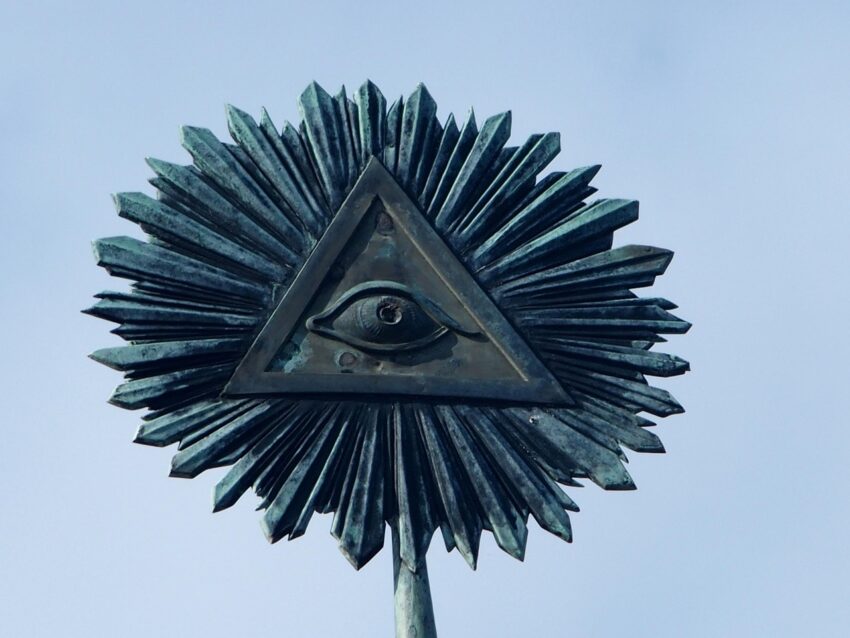
[Another in the series of “Responding to Bumper Stickers,” or “Long Answers to Short Questions,” in which I try to give a Latter-day Saint response to a question or accusation commonly lobbed against us on X.]
I mentioned in passing some Latter-day Saint disagreements with the creedal doctrine of the Trinity in my post specifically about the creeds, but I wanted to revisit it.
There are plenty of voices on X that will say that Latter-day Saints aren’t Christian because we “deny the Trinity.”
Well, no, but yes, but also no.
Do we believe in God the Father, His Son Jesus Christ, and the Holy Ghost?
Absolutely. 100%.
But do we believe all the same things about them when a creedal Christian says “the Trinity?”
No, almost certainly not, because said creedal Christian is referencing definitions of God as stated prescriptively in various creeds. (That’s why, when referring to the Father, Son and Holy Ghost, Latter-day Saints use the term “Godhead” rather than “Trinity,” so we won’t be misunderstood as affirming all sorts of theological baggage which we don’t accept.) Here’s some of the language from the Nicene Creed defining Jesus Christ’s relationship to the Father:
…begotten from the Father before all ages,
God from God,
Light from Light,
true God from true God,
begotten, not made;
of the same essence as the Father.
And of course each of these lines is itself just a shorthand for a bunch of theological pronouncements. What does it mean, “Begotten, not made?” That is the summation of a long theological argument about the ontological gulf between divinity and humanity, that Jesus was both somehow “begotten” by the Father while yet being unchangingly co-eternal with Him as opposed to the ex nihilo creation of all other things, and…
What does “of the same essence” mean? What is this “essence,” and what would a different “essence” be?
And further, if an understanding of the relationship of the Father, Son and Holy Ghost in precisely these terms is necessary for salvation, wouldn’t it had been clearly spelled out in the New Testament?
The Athanasian Creed provides further explications with which Latter-day Saints have disagreements:
And the Catholick Faith is this: That we worship one God in Trinity, and Trinity in Unity;
Neither confounding the Persons: nor dividing the Substance.
For there is one Person of the Father, another of the Son: and another of the Holy Ghost.
But the God-head of the Father, of the Son, and of the Holy Ghost, is all one: the Glory equal, the Majesty co-eternal.
Such as the Father is, such is the Son: and such is the Holy Ghost.
The Father un-create, the Son un-create: and the Holy Ghost un-create.
The Father incomprehensible, the Son incomprehensible: and the Holy Ghost incomprehensible.
The Father eternal, the Son eternal: and the Holy Ghost eternal.
And yet they are not three eternal: but one eternal.
As also there are not three incomprehensible, nor three un-created: but one un-created, and one incomprehensible.
So likewise the Father is Almighty, the Son Almighty: and the Holy Ghost Almighty.
And yet they are not three Almighties: but one Almighty.
So the Father is God, the Son is God: and the Holy Ghost is God.
And yet they are not three Gods: but one God.
So likewise the Father is Lord, the Son is Lord: and the Holy Ghost is Lord.
And yet not three Lords: but one Lord.
For like as we are compelled by the Christian verity: to acknowledge every Person by Himself to be God and Lord;
So we are forbidden by the Catholick Religion: to say, there be three Gods, or three Lords.
The Father is made of none: neither created, nor begotten.
The Son is of the Father alone: not made, nor created, but begotten.
The Holy Ghost is of the Father and of the Son: neither made, nor created, nor begotten, but proceeding.
So there is one Father, not three Fathers; one Son, not three Sons: one Holy Ghost, not three Holy Ghosts.
And in this Trinity none is afore, or after other: none is greater, or less than another;
But the whole three Persons are co-eternal together: and co-equal.
So that in all things, as is aforesaid: the Unity in Trinity, and the Trinity in Unity, is to be worshipped.
He therefore that will be saved: must thus think of the Trinity.
From where I sit, this seems like “philosophical cope” to try to make Christian faith palatable in terms of Hellenistic philosophy. At the very least, it purports to be a logical extrapolation of ideas found in the Bible… but I have trouble crediting a logical extrapolation which ends up with illogical “mysteries.” You can’t both say that reason demands the conclusions while also disclaiming that the conclusions are incomprehensible.
Such as:
- how the Glory between the three can be equal when Jesus describes His glory as being given to Him by the Father (John 17:22)
- how they can each be Almighty and co-equal and “none is greater” when Jesus clearly says that “my Father is greater than I” (John 14:28) and subordinates His will to the Father’s repeatedly
And again, the last line of this quoted section: If thinking this of the Trinity is necessary to salvation, wouldn’t that have been something valuable for Jesus to spell out, either before or after His resurrection?
So, do we believe in the Trinity as in the three personages of the Father, the Son, and the Holy Ghost? Yes. Do we believe that the philosophical formulations of the various post-biblical creeds are (a) authoritative, (b) necessary to believe in their granular definitions, or (c) descriptive of reality? No, no, and no.
Now, if the person insisting on the authority of various creeds are Roman Catholic or Orthodox, they at least have a leg to stand on, as both of those venues of Christianity hold to continuing authority in the Church and the validity of tradition in determining doctrine, so they can legitimately insist that a post-biblical construction of the doctrine of the Trinity which relies more on eisegesis of the New Testament than exegesis (yes, I’ll do a post on that one of these days) can still be authoritative. But if they insist that one must respect that authority to be considered a Christian, they are in danger of re-excommunicating their Protestant brothers (and the Roman Catholics and Orthodox excommunicating each other, again). Because if accepting that authority is necessary to be a Christian, what difference if the rejection is of that authority five hundred years ago (the Reformation), or a thousand years ago (the Great Schism), or fifteen hundred years ago (composition of the creeds)?
But if the person denying the Christianity of Latter-day Saints because of rejection of creedal formulations of doctrine is a Protestant, and thus presumably holds to sola scriptura… then how can they hold that formulations made centuries after the writing of the New Testament are still authoritative? Note that I’m not saying that a sola scriptura Protestant can’t hold to those formulations of the doctrine of the Trinity, but that he can’t insist on them as authoritative if they can’t be shown clearly and unambiguously in the primary text. And if they could be shown clearly an unambiguously in the primary text… then we would have had no need for the creeds to spell out such doctrines with specificity far beyond what I can find in the New Testament.
To sum up: Yes, we believe in the Father, the Son, and the Holy Ghost, as described in the Bible — at least, we see our understanding as consistent with the text of the Bible (even if it does not derive entirely from there).
Protestants, Catholics, and Orthodox (the body of believers that I lump together as “creedal Christians”) believe in the Father, the Son, and the Holy Ghost, and they see their understanding as consistent with the text of the Bible.
Latter-day Saints believe that creedal Christians have got some important things wrong. Creedal Christians believe that Latter-day Saints have got some important things wrong (and, to a lesser degree — at least lesser than when their were literal wars fought over these things — each group believes that the others have got some important things wrong).
Latter-day Saints have no problem affirming that creedal Christians are, in fact, Christians, and respect their faith and devotion even while disagreeing with their understanding.
I don’t think that reciprocal respect is something we shouldn’t expect.